
Subcision for Acne Scars: When Microneedling Alone May Not Be Enough
Learn why some depressed and tethered acne scars may need more than microneedling, and how subcision can form part of a personalized acne scar treatment plan.
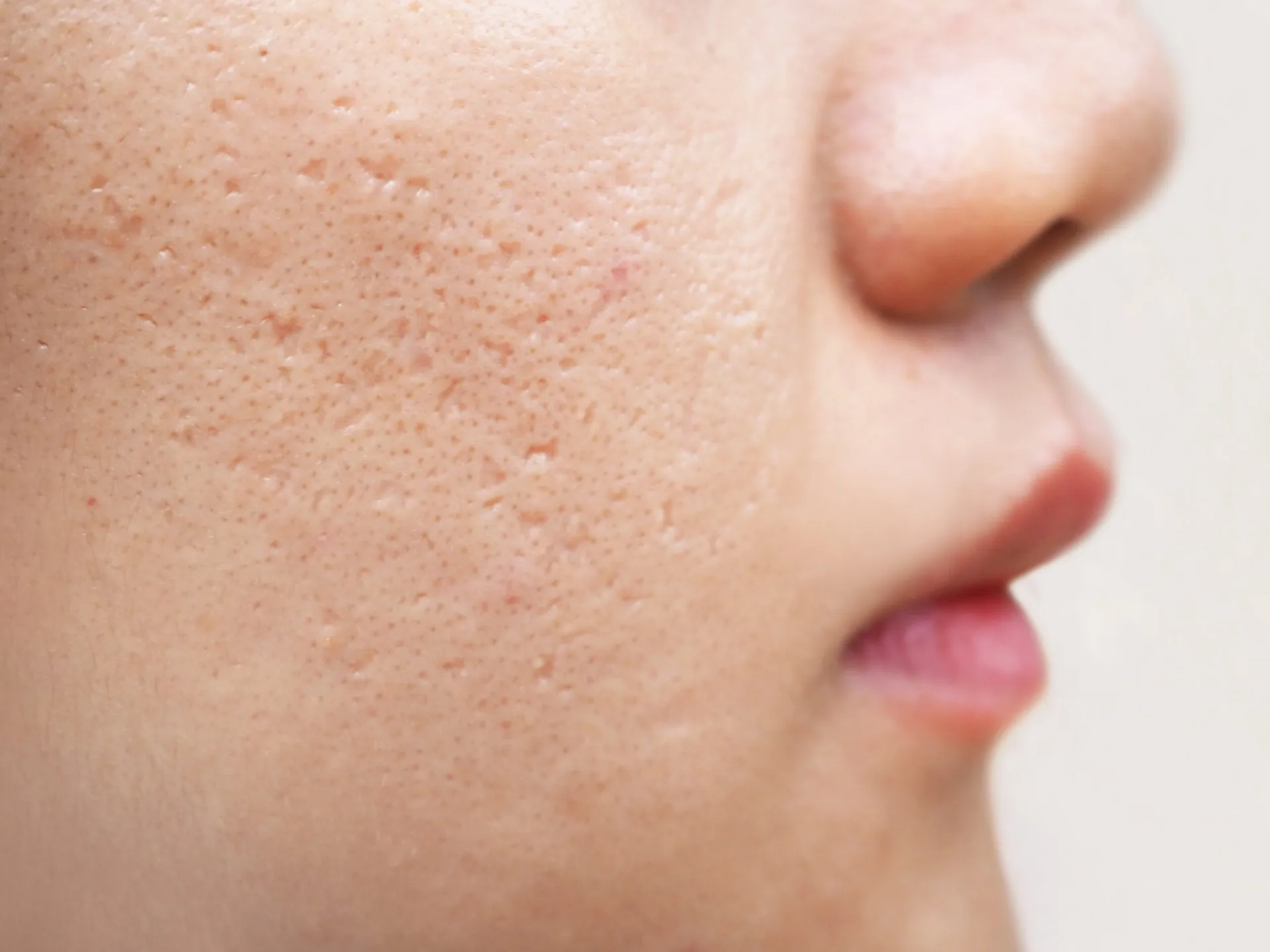
If you have treated acne scars with microneedling but still notice deeper depressions in the skin, it does not necessarily mean that microneedling has failed. The remaining scars may simply have a different structure that requires a different treatment approach.
Acne scars are not all the same. Some are relatively superficial, while others extend deeper into the skin or are held down by fibrous attachments beneath the surface. Understanding those differences is an important part of choosing an appropriate treatment.
At MD Glow Lab in Toronto, Dr. Keith Wong assesses the pattern, depth and characteristics of acne scarring before recommending treatment. For certain depressed or tethered scars, subcision may be considered alongside treatments such as microneedling rather than simply repeating the same procedure.
Why do different acne scars need different treatments?
The term “acne scars” describes several different changes that can remain after acne has healed.
Atrophic acne scars - scars that create a depression in the skin - are commonly described as:
- Rolling scars, which can create broader, wave-like depressions in the skin
- Boxcar scars, which tend to have more defined edges
- Ice-pick scars, which are typically narrower and extend more deeply into the skin
A person can have more than one type at the same time.
There can also be differences within the same general scar category. One depressed scar may move relatively freely with the surrounding skin, while another may be anchored downward by fibrous tissue beneath it.
That distinction matters because a treatment that stimulates remodelling within the skin does not necessarily address a physical attachment underneath a scar.
This is why Dr. Wong looks at the overall architecture of the scarring, rather than treating every acne scar with the same device or procedure.
What does microneedling do for acne scars?
Microneedling uses fine needles to create controlled micro-injuries within the skin. This stimulates the body’s natural healing response and supports the production of new collagen.
Over time, this remodelling can help improve concerns such as uneven texture and the appearance of certain acne scars.
Microneedling can therefore be an important part of an acne scar treatment plan. However, its mechanism is primarily based on stimulating repair and remodelling within the skin.
If part of a scar is being physically pulled downward from underneath, collagen stimulation alone may not fully address that structural component.
That is where subcision becomes relevant.
What is a tethered acne scar?
A tethered scar is attached to deeper tissue by fibrous bands beneath the skin.
These attachments can pull the base of the scar downward, contributing to the depression visible at the surface.
Imagine trying to smooth a sheet of fabric while part of it is pinned down from underneath. Improving the fabric itself may make a difference, but the indentation can remain because something is still holding it down.
Skin is considerably more complex than fabric, but the analogy helps explain why some depressed scars respond differently from others.
For a suitable tethered scar, treatment may need to address the attachment beneath the skin as well as the quality of the skin above it.
How does subcision work?
Subcision is a minimally invasive procedure designed to release fibrous attachments beneath certain depressed acne scars.
The treatment works below the skin’s surface. By carefully releasing the tissue contributing to the tethering, the scar is no longer being held down in the same way.
This is fundamentally different from microneedling.
Microneedling stimulates remodelling within the skin. Subcision addresses certain structural attachments underneath a scar.
Neither mechanism automatically makes one treatment “better” than the other. They are designed to address different aspects of acne scarring.
When might microneedling alone not be enough?
If a scar is significantly tethered, repeatedly treating the surface without addressing the attachment underneath may leave an important part of the scar unchanged.
That does not mean every depressed scar requires subcision.
It means that treatment selection should begin by identifying why the scar looks the way it does.
During an acne scar assessment, Dr. Wong may consider factors such as:
- The type and shape of the scar
- How deep the depression appears
- Whether the scar appears tethered
- The overall texture of the surrounding skin
- Whether multiple scar types are present
- Previous acne scar treatments
- Your skin and treatment goals
The resulting treatment plan may therefore be different for two patients who both describe their concern simply as “acne scars.”
Subcision vs. microneedling: what is the difference?
The easiest way to understand the difference is to look at what each treatment is trying to accomplish.
Microneedling
Microneedling creates controlled micro-injuries in the skin to stimulate a healing response and collagen remodelling.
It may be considered when the treatment goal includes improving the appearance of acne scars, uneven texture, pores and overall skin quality.
Subcision
Subcision works beneath certain depressed scars to release fibrous attachments contributing to tethering.
Rather than primarily stimulating the surface and dermal layers, the procedure addresses a structural component underneath suitable scars.
Why might both be considered?
Because a patient can have both tethering and textural irregularity.
Releasing a tethered scar does not necessarily address every aspect of the surrounding skin, just as stimulating collagen does not necessarily release a scar that is anchored downward.
For some patients, these treatments may therefore play different roles within the same overall acne scar strategy.
Where does RF microneedling fit?
Radiofrequency microneedling combines microneedling with radiofrequency energy delivered into targeted depths of the skin.
Like conventional microneedling, it can be used as part of a treatment strategy for acne scarring and skin texture. The addition of radiofrequency provides another mechanism for controlled treatment within the skin.
At MD Glow Lab, technologies such as Morpheus8 may be considered when appropriate based on the patient’s skin and treatment goals.
But the same principle still applies: a device should be selected based on what needs to be treated.
If a particular scar is being held down by fibrous attachments, Dr. Wong may consider whether that structural component needs to be addressed separately rather than relying solely on additional resurfacing or collagen stimulation.
Why combination treatment can make sense for acne scars
Combination treatment does not mean doing as many procedures as possible.
It means matching different treatments to different components of the problem.
For example, an acne scar treatment plan might need to consider:
- Tethering beneath depressed scars
- Overall uneven texture
- Different scar shapes and depths
- Skin quality surrounding the scars
- Pigment or redness left after acne
- The patient’s previous treatments and response
One procedure may address several of these concerns, but rarely does one treatment address every possible component equally well.
This is why acne scar treatment is often better thought of as a strategy rather than a single procedure.
Does every depressed acne scar need subcision?
No.
Subcision is intended for selected depressed scars where underlying attachments contribute to their appearance. Other scar types may be better addressed using different approaches.
This distinction is particularly important if you are researching treatments online. Two before-and-after photographs may both be labelled “acne scars” even though the patients had very different scar patterns and received different treatment plans.
A treatment that produced a meaningful improvement for one person’s scars may therefore not be the most appropriate treatment for another person’s.
What if I have several different types of acne scars?
That is common.
You do not need to identify each scar type yourself before booking a consultation. In fact, deciding on a procedure before understanding the scars can put the process backwards.
A more useful starting point is to identify what bothers you:
- Deep depressions
- Uneven overall texture
- Shallow scars
- Individual scars that remain prominent
- Enlarged-looking pores
- Colour changes after acne
- A combination of several concerns
Dr. Wong can then examine the skin and determine which characteristics are contributing most to what you see.
From there, treatment can be prioritized rather than simply applying the same procedure across the entire face.
What should you expect from acne scar treatment?
Acne scar treatment is generally about improvement, not complete removal of every scar.
The degree of improvement varies depending on the type and severity of scarring, the treatments being used, individual healing and other factors.
Changes from treatments that rely on collagen remodelling also develop over time rather than appearing immediately.
For these reasons, Dr. Wong will discuss realistic expectations based on your individual scarring rather than promising a particular percentage of improvement.
A thoughtful plan may also evolve. How the skin responds to an initial treatment can provide useful information when deciding what should come next.
Questions to ask during an acne scar consultation
Rather than asking only, “What is the best treatment for acne scars?”, consider asking:
- What types of scars do I have?
- Which of my scars appear tethered?
- What is each recommended treatment intended to address?
- Would one treatment address all of my scars?
- Could different areas require different approaches?
- How will we assess my response before deciding on the next step?
- What changes are realistic for my particular scar pattern?
These questions shift the conversation away from finding a single “best” device and toward understanding the treatment strategy.
Should I choose subcision or microneedling?
You may not need to choose between them yourself.
Microneedling and subcision work differently, and the appropriate option depends on the structure of the scars being treated. Some patients may be better suited to one approach, while others may have different scar characteristics that lead Dr. Wong to discuss a combination or staged treatment plan.
At MD Glow Lab, the starting point is an assessment of your scars rather than a predetermined procedure.
Learn more about subcision for acne scars or explore skin treatments at MD Glow Lab to learn more about Dr. Wong’s approach to personalized skin rejuvenation.
Begin Your Glow Journey
Experience the art of science-driven beauty - refining your glow and elevating your confidence through natural results by Dr Keith Wong.
Have a question about which treatment is right for you? Send us an inquiry, or book your appointment online when you are ready.
